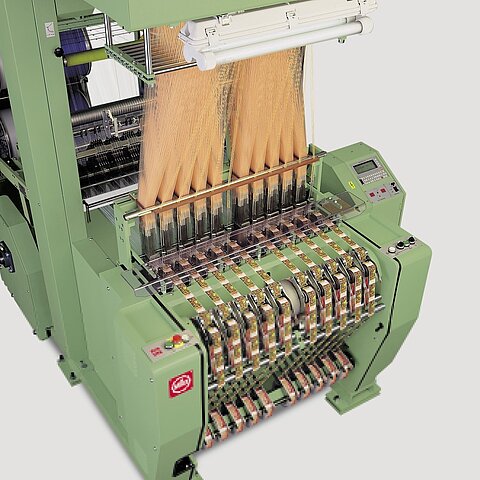
A weaving mill makes fabric by crossing warp yarns with weft yarns on a loom. Broad looms make yardage such as twill, canvas and shirting. Jacquard looms control each warp yarn for woven pictures, logos and complex patterns. Narrow fabric looms make tape, ribbon, elastic and webbing.
A brand needs a weaver for its own woven design, a jacquard throw or tapestry, or webbing and tape made in its colors. US mills often take smaller custom runs than overseas mills, with shorter lead times.
Good for
✓Jacquard throws, blankets and tapestries
✓Custom webbing and tape for bags, straps and leashes
✓Woven logos and patterns built into the fabric
✓Fabric from a specific fiber or a US-grown supply chain
Look elsewhere for
✕Brand labels for garments: look for LABELS / HANG TAGS
✕Knit fabric or sweaters: look for KNITTING
✕Buying stock fabric: look for FABRIC SOURCING
02Proof of work
No photos yet
Shops that offer weaving add photos of their work to their profile, tagged WEAVING. They show here.
✓The end use, so the mill can choose the weave and the yarn
What sets the price
—Setting up a new warp, which is a large share of a small run
—The number of yarn colors and the weave complexity
—Jacquard design and weave file setup
—The fiber and yarn count
—Finishing such as washing, napping or heat setting
07Questions
Why does a short weaving run cost more per yard?
Every new warp has to be wound and drawn into the loom by hand or machine. That setup costs the same for 50 yards as for 5,000, so it weighs more on a small run.
Can a mill weave my logo into webbing?
Yes. Narrow fabric mills with jacquard heads can weave a logo or pattern into tape and webbing. Simple stripes can be made on standard needle looms.