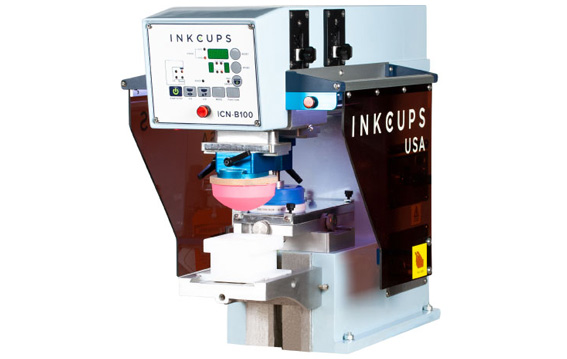
Pad printing picks up ink from an etched plate with a soft silicone pad and presses it onto the part. The pad wraps around curves, so it can print where a flat screen cannot.
It is the usual way to put a logo or markings on pens, bottles, golf balls, zipper pulls, tags, electronics and other small parts, one color at a time.
Good for
✓Logos and markings on small or curved items
✓Fine lines and small text
✓Plastic, metal, glass and many coated surfaces
✓Long runs of the same part
Look elsewhere for
✕Large print areas
✕Full-color photographs
02Proof of work
No photos yet
Shops that offer pad printing add photos of their work to their profile, tagged PAD PRINTING. They show here.
—Plates and fixtures, made once per design and part
—The number of colors
—The quantity
06Questions
What can be pad printed?
Most small or curved parts of plastic, metal or glass: pens, bottles, tags, hardware, balls and electronics. Some plastics need a treatment first so the ink sticks.
How many colors can pad printing do?
One per plate, so most jobs are one to four colors.